
Educational Resource — Romania
Embrace a Balanced Path to Well-being
An independent knowledge base exploring the principles of holistic nutrition, moderate physical activity, and natural approaches to supporting daily energy and vitality.
Educational content only. No promises of outcomes.
Understanding Holistic Nutrition
Holistic nutrition looks beyond isolated nutrients, considering the overall quality and variety of foods in one's daily pattern. It recognises that the context in which food is consumed — including meal timing, mindful attention, and food origin — plays a meaningful role in how the body processes and uses what it receives.
Rather than focusing on restricting particular items or tracking precise calorie figures, a holistic lens asks: does this food contribute genuine nourishment? Does the overall pattern of eating provide the body with a broad range of vitamins, minerals, fibre, and macronutrients in reasonably balanced proportions?
Nutrient Density
A term describing how much nutritional value a food provides relative to its calorie content. Foods rich in vitamins, minerals, fibre, and beneficial compounds are considered nutrient-dense, regardless of calorie count.
Mindful Eating
The practice of paying deliberate attention to food choices, hunger and fullness signals, and the sensory experience of eating, rather than consuming meals in a distracted or habitual manner.
- ■Prioritising whole foods over heavily processed alternatives
- ■Seeking variety across food groups for a wider nutritional spectrum
- ■Recognising the role of seasonal and locally available produce
- ■Understanding that eating patterns matter more than single meals

Figures are conceptual illustrations, not prescriptive targets.

The Role of Physical Activity
Consistent, moderate movement is widely recognised as one of the most thoroughly studied contributors to daily vitality. Walking, cycling at a comfortable pace, swimming, gentle stretching, and similar activities all represent forms of physical engagement that the body is naturally designed to perform regularly.
Historical patterns of human activity show that our ancestors maintained continuous low-intensity movement throughout the day — not intense, concentrated workouts, but sustained, varied motion as part of daily life. Contemporary sedentary habits represent a significant departure from this baseline.
Pre-Industrial Era
Daily Physical Engagement
Agricultural and craft-based societies integrated continuous physical work throughout waking hours, with varied muscle engagement and regular outdoor exposure.
Early 20th Century
Mechanisation Begins
Industrial machinery began reducing the physical demands of many occupations, marking a gradual shift toward more sedentary work patterns in urban populations.
Late 20th Century
Desk-Based Work Expands
Office environments and digital technology became dominant, creating prolonged periods of physical inactivity for large portions of working adults.
Present Day
Deliberate Movement as a Consideration
Many people now consider planned physical activity to supplement the reduced movement of daily routines, exploring accessible forms that fit into modern schedules.
Hydration and Daily Vitality
Water is the primary medium through which virtually every physiological process occurs. Nutrient transport, temperature regulation, joint lubrication, waste removal, and cellular communication all depend on adequate fluid availability. Despite this, hydration is frequently overlooked in discussions of daily well-being.
Fluid needs vary considerably between individuals based on body composition, activity levels, climate, and dietary habits. Foods with high water content — such as cucumbers, leafy greens, citrus fruits, and tomatoes — contribute meaningfully to overall daily fluid intake alongside direct fluid consumption.
- Electrolytes
- Minerals such as sodium, potassium, magnesium, and calcium that carry an electrical charge in fluids. They play essential roles in muscle contraction, nerve signalling, and maintaining fluid balance between cells and surrounding tissue.
- Cellular Hydration
- The state in which individual cells maintain adequate water content to perform their functions. Even mild reductions in cellular water availability can affect concentration, physical performance, and general comfort.
- Metabolic Processes
- The biochemical reactions occurring within the body that convert food into energy and building materials. Many of these reactions require water as either a reactant or a solvent to proceed effectively.
- Osmotic Balance
- The equilibrium of dissolved substances on either side of a cell membrane. Maintaining this balance ensures cells neither shrink from fluid loss nor swell from excess, both of which affect normal function.
Context and Variability
General guidance on daily fluid intake varies widely across sources and populations. Individual context — including climate, physical exertion, age, and dietary composition — means that general figures offer only a rough orientation. Attention to personal cues and varied fluid sources is broadly considered more practical than strict numerical targets.
Cultivating Sustainable Habits
Durable changes to daily routines are generally more achievable through gradual, incremental adjustments than through sweeping overhauls. Small consistent practices compound over time, becoming embedded in daily life with decreasing cognitive effort.
Rapid Overhaul Approaches
- Require high initial effort and willpower
- Often create unsustainable disruption to routines
- More likely to be abandoned under stress
- Can create an all-or-nothing psychological dynamic
- Difficult to maintain alongside existing commitments
Gradual Habit Integration
- Requires lower initial energy expenditure
- Builds on existing routines incrementally
- More resilient to interruptions and setbacks
- Allows for flexible adaptation over time
- Easier to sustain alongside existing life structures
Mindful Eating
Eating with deliberate attention to hunger signals, food qualities, and the sensory experience of meals, rather than in distracted or hurried contexts.
Daily Movement
Incorporating regular, accessible forms of physical activity into daily routines, from walking to gentle stretching, without requiring specialised equipment.
Quality Sleep
Prioritising consistent sleep schedules and sleep-supportive environments as a foundational component of physiological restoration and energy balance.
Balanced Variety
Exploring a wide range of whole foods across seasons and cultures, recognising that dietary variety is associated with broader nutritional coverage.
Sleep, Stress, and Balance
Sleep, stress response, and nutritional patterns are deeply interconnected physiological systems. Each influences the others in measurable ways, creating a dynamic that functions either as a supportive cycle or a destabilising one, depending on the conditions established over time.
Adequate sleep allows the body to conduct essential repair processes, regulate appetite-related hormones, consolidate cognitive function, and clear metabolic byproducts from the brain. Chronic sleep disruption alters these processes in ways that affect energy availability, mood stability, and food preference patterns.
Prolonged stress activates systems originally designed for short-term threat responses. When these systems remain activated over extended periods, they influence digestive function, energy utilisation, and sleep quality — demonstrating how deeply these three domains intersect.
| Factor | Affects Sleep | Affected by Stress | Influenced by Nutrition |
|---|---|---|---|
| Energy Levels | Strongly | Strongly | Strongly |
| Appetite Regulation | Strongly | Moderately | Strongly |
| Cognitive Focus | Strongly | Strongly | Moderately |
| Physical Recovery | Strongly | Moderately | Strongly |
| Mood Stability | Strongly | Strongly | Moderately |
Conceptual matrix for informational illustration. Dot colour indicates relative interdependency level as described in general wellness literature.
Key Concepts
- Circadian Rhythm
- An internal biological clock that regulates sleep-wake cycles, hormone release, and other body functions on approximately a 24-hour cycle, influenced by light and environmental cues.
- Cortisol
- A hormone produced in response to stress that mobilises energy resources. When consistently elevated, it can affect sleep architecture, appetite signals, and metabolic processes.
- Autonomic Balance
- The balance between the sympathetic (activating) and parasympathetic (calming) divisions of the nervous system, which influences both stress response and digestive function.
- Restorative Sleep
- Sleep that includes adequate cycles of deeper stages, during which the body conducts repair processes, consolidates memory, and regulates various biological systems.

Natural Supplements: An Informational Perspective
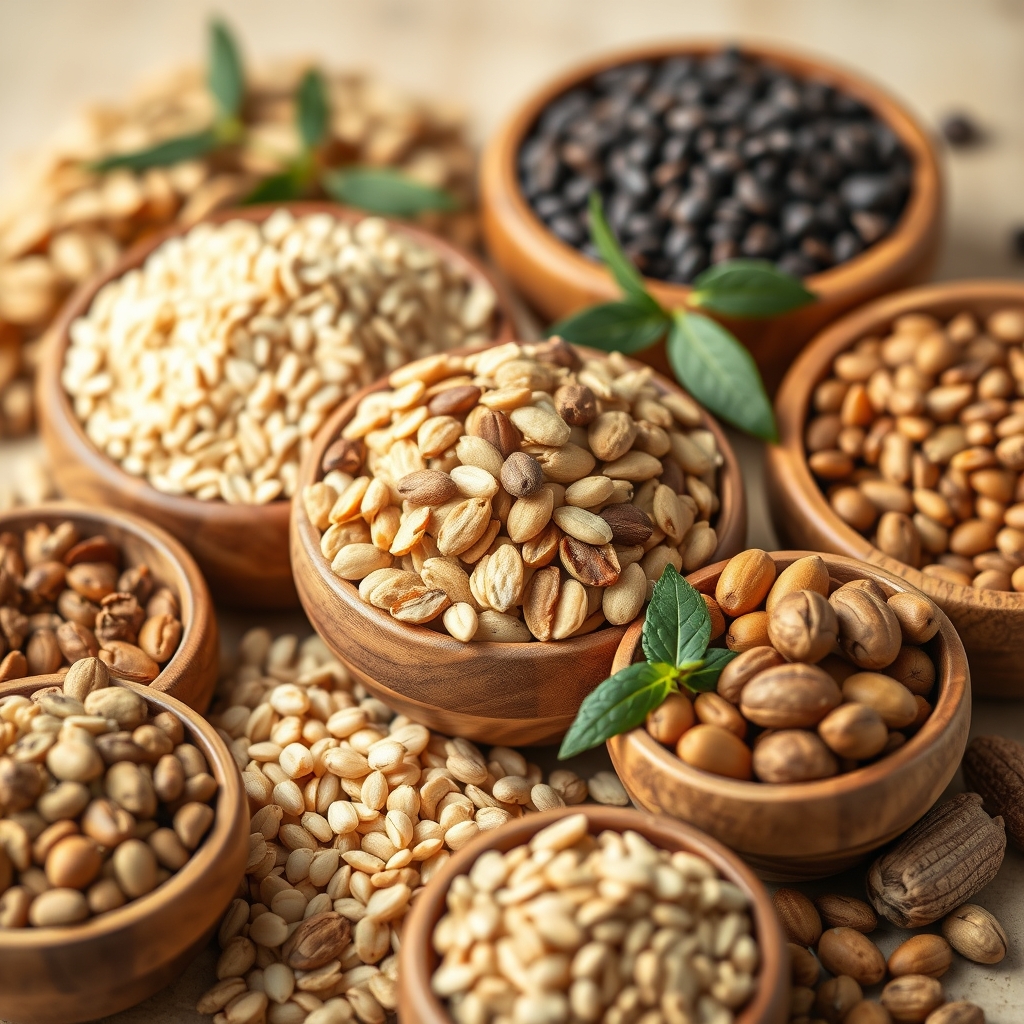
Certain natural ingredients have been studied for their general nutritional profiles and the ways in which they can complement a varied eating pattern. Seeds such as chia and flax, algae like spirulina, and fibre-rich materials including psyllium husk are notable for their concentration of specific nutrients that may be less abundant in typical Western diets.
These ingredients are not presented here as treatments or interventions. They are plant-derived food components with documented nutritional compositions, used in various culinary traditions around the world. Their relevance in a modern context lies in their potential to contribute missing elements to a diet — particularly fibre, omega-3 fatty acids, and various micronutrients.
Chia & Flax
Small seeds with high concentrations of omega-3 alpha-linolenic acid, soluble fibre, and lignans, used as versatile culinary additions.
Spirulina
A blue-green algae recognised for its protein density and concentration of B vitamins, iron, and phycocyanin, a natural pigment compound.
Explore the full catalog of natural complexes with detailed nutritional context.
Explore the CatalogFrequently Asked Questions
The following questions reflect common areas of curiosity about nutrition and lifestyle topics. All answers are informational in nature and do not constitute individual advice.
Debunking Common Myths
Nutrition and well-being are areas where popular misconceptions circulate widely. The following clarifications draw on general consensus in nutritional science to contextualise common misunderstandings.
Myth
All fats are harmful and should be eliminated from a healthy eating pattern.
Contextual Understanding
Fats are essential macronutrients. The body requires fat for vitamin absorption, hormone production, and cellular structure. The type and source of fat in the diet is the subject of ongoing nutritional research, not the presence of fat itself.
Myth
Consuming carbohydrates always leads to unwanted weight gain.
Contextual Understanding
Carbohydrates are the body's primary preferred energy source. The type, preparation, fibre content, and overall dietary context of carbohydrate-containing foods are all relevant considerations that nutritional literature addresses in detail.
Myth
Natural supplements alone can substitute for a varied and balanced diet.
Contextual Understanding
Whole foods provide nutritional compounds in combinations and forms that are not fully replicated by any single supplement. Natural additions like seeds and algae are discussed as complements to a varied diet, not as dietary substitutes.
Myth
Skipping meals is an effective strategy for improving energy balance.
Contextual Understanding
Meal frequency and its relationship to energy regulation is a nuanced topic in nutritional science. Regular, varied food intake is associated with more stable energy availability across the day in many population studies, though individual patterns vary.
Myth
Only intense exercise produces meaningful physiological benefits.
Contextual Understanding
Moderate-intensity and low-intensity movement have been studied extensively and appear throughout mainstream health research in association with positive well-being markers. Daily walking is among the most frequently referenced accessible forms of physical activity.

Terms Used
- Macronutrients
- The three main categories of energy-providing nutrients: carbohydrates, proteins, and fats, each with distinct roles in body function.
- Energy Balance
- The relationship between energy consumed through food and energy expended through bodily processes and activity, a concept in nutritional science.
Explore the Full Range of Topics
The Zalter catalog presents educational information on natural complexes, nutritional ingredients, and the principles underlying a balanced approach to daily well-being.
Discover Related ArticlesInformation Context & Limitations
All content on this site is general educational material. It does not constitute individual recommendations, professional nutritional advice, or guidance on personal health decisions. Nutritional science encompasses a wide range of perspectives, ongoing research, and individual variability. The information presented here reflects general educational context only and should not replace personal judgement or professional consultation where appropriate.